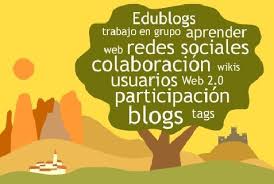
El siglo que vivimos nos ofrece un gran espacio para la comunicación y a diario vemos como el público en general usa la tecnología con mucha comodidad. La educación debiera girar alrededor de la informática sin ninguna clase de temor.
Los blogs educativos o edublogs como se han venido en llamar, son hoy en día una interesante herramienta educativa que permite ampliar horizontes no solo al maestro, sino también al alumno, pues este hará uso de las Tics de una manera simple y sin darse cuenta estará estudiando un determinado tema escogido por el docente y quien para ello se deberá de haber preparado, dado que en si es sencillo, lo que que en realidad cuesta es comprender su utilidad académica, por ello el profesor debe no solo manejar su materia, sino las herramientas tecnológicas que le permitirán tener acceso a todo lo necesario.
Yo empecé como jugando y después me di cuenta de la gran utilidad que se deriva de los blogs, por medio de este les sugiero a mis alumnos muchos temas a través de los posts y ellos responden con facilidad usando el blog mismo o entregándome los trabajos en el aula. La edad de mis estudiantes va de 10 a 11 años y durante el año los voy incentivando para que conozcan el blog, no todos se animan, quizá porque no todos los profesores lo hacen.
Razones que se esgrimen para no usarlo:
Se puede filtrar información de la institución educativa que puede dañar la imagen.
Los alumnos pueden hacer mal uso de la información
Puede resultar una polémica entre menores de edad que trasgreda los cánones estudiantiles.
Razones para usar los blogs educativos:
Coloca al centro educativo en el siglo XXI.
Permite a los alumnos potenciar sus conocimientos al aprender interactivamente.
Manejo de destrezas y capacidades más que de contenidos.
Estas y otras razones llevan al aprendizaje más allá de sus propios límites, no se circunscriban al aula, las tics ofrecen cosas muy valiosas para todos los maestros que deseen capacitarse en su uso.
La informática lleva la delantera a la educación, son muchos los tramos que ha recorrido y lo ha hecho sola, sin embargo la educación no quiere quedarse rezagada es por ello que en el campo educativo se han ido modelando diferentes modos de enseñar a enseñar y de aprender a aprender, algunos con cierto éxito y otros han fracasado, estos diversos modelos se viene experimentando desde hace muchos años y nuestros estudiantes, eternos conejillos de indias, han tenido que ir soportando todo los que los educadores han querido hacer por ellos en aras de una mejor educación.
Hoy en día se están introduciendo ya en las escuelas las Smart Boards, su costo es alto, sin embargo hay escuelas que empiezan a utilizarlas en nuestro país. La gran pregunta será: ¿Están los docentes preparados para dar este salto cualitativo? Vean estos vídeos:
(copien en google ambos links)
http://www.youtube.com/watch?v=dY7s46WZb8g
http://www.youtube.com/watch?v=XIiOTtRi4g8
Es un tema que tiene para largo así es que el debate empezará.
La informática surgió en un momento en el que no se vislumbraba si tendría éxito o no, sin embargo no se dejó amilanar y se fue forjando de a pocos, creando un campo de cultivo que se fue perfeccionando al pasar del tiempo. El camino que recorrió fue primero en el campo comercial e industrial por las décadas del 70 y 80 y luego llega a la educación.
En el campo educativo ingresa como un huracán, no da tiempo para cuestionarse del por que de su ingreso o de su utilidad, simplemente se para delante nuestro y nos obliga a usarla. Recuerdo el año 1997, como un año en el que hice mis pininos en Internet, no entendía como era posible leer tantas páginas de diversos temas, lo que sucedía era sencillo, para un letrado informático, más no para mi pues mis conocimientos eran pobres y solo era una analfabeta tecnológica.
Al respecto Antonio Battro(2003) nos dice: “La alfabetización digital es un requisito del siglo XXI. Felizmente las “habilidades digitales” son muy accesibles, independientemente del nivel socio económico, ya que se basan en acciones muy elementales –como hacer clic–, algo que todos los alumnos pueden aprender sin dificultad. Es más, los niños y los jóvenes demuestran mayores habilidades digitales que muchos adultos. Eso sí, para que una habilidad digital se desarrolle es preciso contar con computadoras y redes informáticas.”[1]
Ese es nuestro siglo XXI, mas ello no ocurría en el siglo anterior, muchos de nosotros los docentes nos formamos de una manera muy artesanal, ingresando al uso de las TICs atropellándonos unos a otros y les dimos a nuestros alumnos nuestros pobres conocimientos en aras de un intercambio tecnológico que no fue tal. Y disculpen si vuelvo a mi experiencia, pero recuerdo que a fines del siglo anterior introduje con fuerza el uso de Power Point en mis clases y luego con el paso de los años lo fui dejando, porque saturé a mis alumnos y lo mismo sucedió conmigo.
Un maestro actualizado debe, no solo manejar las TICs, sino darse cuenta de su importancia y ayudar a los alumnos a valorar el uso de las mismas. Veamos que hace un alumno promedio hoy en día:
oHace uso del chat con un lenguaje fuera de lo común.
oNavega por Internet, copia y pega y ahí termina su investigación.
oNo discrimina la información, usa lo primero que aparece.
oNo lee libros, dice que le es suficiente con Internet.
oEl uso de las herramientas tecnológicas las minimiza.
oLas presentaciones en Power Pointson también copia y pega.
Hay un pequeño número de alumnos que se si dedica al trabajo académico y lo hace bien y eso se debe a la calidad de su aprendizaje, debido a que sus maestros se prepararon adecuadamente para hacer llegar los conocimientos tecnológicos a sus pupilos.
Moreira(2009) publica en su blog un post que dice: “La era digital llega al Informe Pisa y como subtítulo "La OCDE medirá en 2009 la capacidad lectora en formatos electrónicos de los alumnos - El examen se hará con una aplicación que simula Internet".[2] El mismo informe dice que no será posible evaluar a todos los alumnos usando computadoras por su alto costo y que de los 60 paísesque ingresarán a la evaluación solo 17 de ellos tienen la capacidad económica parasometerse a la prueba de lectura electrónica.
Cada vez es más claro que los avances tecnológicos tendrán que seguir su curso para que de una u otra forma se logre digitalizar por completo a la educación, no se puede mantener alejado a los alumnos de los avances tecnológicos pero también es bien cierto que los profesores tendrán que dar pasos mas grandes y seguros hacia el cambio, no es lo mismo pararse al frente de un aula y usar la pizarra y tizas que usar una computadora o la pizarra inteligente (smart board) (Ver videos informáticos) porque para ello el docente y los funcionarios y/o directivos de su escuela tendrán que haber pasado por las aulas de la informatización y no solo para comprar computadoras, si no para agilizar y amenizar una clase con imágenes modernas y contextualizadas que motiven al alumno y no lo duerman en el salón de clases.
Si el maestro prepara un blog o una pagina Web con información de su curso esta debe ser fácil de usar y con todo lo requerido, sin abusar delos enlaces que a la larga pierden al alumno y no sabe por donde empezó.
De todo lo expuesto queda claro que la informática es un gran campo de estudio, necesario para la educación y sus educadores con el fin de llegar a los alumnos y hacerlos entender que por ejemplo, Internet es una gran autopista de la información, sin embargo uno puede perderse en ella si no sabe usarla por ello un maestro no debe decirle a sus alumnos “busca en Internet” debe darle las paginas para que este pueda navegar con tranquilidad y no frustrarse al no conseguir la información requerida por su profesor.( leer: juralumun.galeon.com)
Las herramientas tecnológicas son en gran medida necesarias en el campo educativo pero no debe abusarse de ellas, deben usarse con mesura y de una manera que permita el intercambio de conocimientos y el uso colaborativo de los mismos.
Ejemplo de sesión de la actividad 8. (La haré en castellano para facilitar la comprensión de todos los participantes)
Activity 8
1. Leer el título de la lectura y deducir cual será el tema del texto.
2. Leer en silencio.
3. Señalar los personajes principales y secundarios.
4. Subrayar la idea principal del texto.
5. Compartir con un compañero la interpretación del texto.
6. Al término de la actividad anterior, resolver los ejercicios.
7. Comparar resultados con un compañero.
8. En un plenario se hacen preguntas y respuestas relacionadas a la historia.
9. Se revisan los resultados con plena participación del aula.
Read carefully the following story.
A VERY FINE TRIP
How are you? How was your summer vacation?My family and I went on vacation to Mexico for one week.I had a wonderful time. Mexico is a very beautiful and interesting country. We went to many museums and to many historical places.
I must tell you about a very funny thing that I saw one day at a market in Mexico City.This market had little stands where different objects made out of wood, clay and silver were sold. As we were walking along the sidewalk, we noticed an American couple walking ahead of us.The woman was busy looking at the beautiful things on the shelves.She wasn’t looking where she was walking.All of a sudden, she tripped on a crack in the sidewalk.She slipped, dropped her sunglasses and pocketbook, knocked over two shelves of pottery, and fell into a big pot.
She wasn’t hurt.She climbed out of the pot, and to everyone’s surprise, she began to laugh.Her husband was very upset and began to yell at her.But the more he yelled, the more she laughed. In the meantime, the owner of the stand picked up each piece of pottery, looked at them carefully, and said angrily to the man, “ROTO”(it means broken in Spanish.) Then the owner said in English, “Your wife thinks this is funny, but wait until she sees the bill!”The poor tourists had to pay for all the broken pottery.As we walked away, the man was still yelling at his wife, but she kept laughing at the situation.I thought it was funny too.
When I see you, I will tell you more about our vacation and show you beautiful photos of Mexico.
When you finish reading twice, solve the set of exercises.
A)While you read, answer YES or NO for “EACH PERSON” (man, woman, stand owner).
1) Was the man walking ahead of Rachel?_____________
2)Did the man tripped on a crack?_____________
3) Did the woman began yelling?_____________
4) Was the woman very angry?_____________
5) Did the man and woman pay for the broken things?_____________
6) Did the man knocked over two shelves of pottery_____________
7) Was the stand owner yelling at the woman?_____________
8) Did the stand owner pick up the pottery?_____________
B)Circle the answer that best completes each sentence.
1)Rachel is writing to ______________________.
a) her motherb) her friendc) her brotherd) none of them
2)Rachel had a ___________________time.
a) none of themb) wonderfulc) badd) fair
3)Rachel spent her vacation in ________________________.
a) Spainb) none of themc) Mexicod) Texas
4)The American tourists were walking around the_______________.
a) blockb) marketc) sidewalkd) none of them
5)The wife thought the situation was ______________.
a) carefulb) seriousc) none of themd) funny
C)Decide if the answer is True or False.
1) Rachel’s family visited historical places_______
2) The woman fell inside a pot._______
3) Silver and clay pots were sold in the museum._______
4) A lot of people were walking ahead Rachel_______
5) The woman became to laugh._______
6)All the tourists in that place paid for the pottery._______
D)Choose the words that better completes each idea.
sidewalk,clay,shelf, pottery, market
1)The woman was only paying attention at the things on the ________________.
2)She was walking on the _______________________ when suddenly she slipped.
3)The pots are made of _________________________.
4)There was a funny accident in a _________________________in Mexico City.
E)Answer the following question. Write good reasons.
Do you think the situation in the story is funny? Why or why not?
El presente documento es una unidad de aprendizaje diseñada siguiendo el Modelo T el que se enmarca y se fundamenta en el paradigma socio - cognitivo y en los nuevos modelos de aprender a aprender como desarrollo de capacidades y valores (en Educared por Román Martiniano) Aqui no se aprecia como realmente es. En Inglés tenemos dos capacidades: Expresión y Comprensión y cada una de ellas tiene sus destrezas.
Si se analiza la unidad se darán cuenta que esta, está diseñada de tal forma que permite un ágil desarrollo de las clases, por ende nuestras sesiones son de un corte muy práctico y dinámico.
LEARNING UNIT 1 - 2009
LEVEL: 6th grade
GRADE: SECTIONS: A, B, C, D
TEACHERS:-Luz Núñez
TERM: 4 WEEKS
TITLE OF THE UNIT: Earning Money
AREA: ENGLISH
BOOK: Pop up now
____________________________________________________________________
CONTENTS
Earning money
- Review: Daily routines.
- Part Time jobs.
- Present Simple and Present Continuous.
- Frequency adverbs
- Past Simple vs Past Continuous
- While+ Past Continuous+ Past Simple
- Past Continuous+when+ past Simple
- Money in the past.
- Wh questions
- Writing Sequences.
- Comparative degree
- Storyline: Snails anyone 1?
LEARNING METHODS
Discrimination of specific information about the frequency of daily activities.
Production oforal texts to ask for and give personal information, through a dialogue.
Interpretation of specific information about teenagers who have part-time job through a set of exercises.
Production of oral texts to ask for and give information about how to earn money through a conversation.
Use of vocabulary and structures to talk about past events in progress, by reading about some experiences.
Production of oral texts to give information about lucky or unlucky experiences by sharing your ideas.
Production of written texts to describelucky or unlucky experiences by writing an anecdote.
Interpretation ofspecific information from the text “A very fine trip” by solving a set of exercises
Discrimination of specific information from a dialogue in a clothes shop, by listening to the CD.
Use of vocabulary and structures to describe comparative degree actions at the moment of speaking, by doing a set of exercises.
Interpretation specific informationabout money in the past from the reading “Money in the past” solving a set of activities.
Production of written texts to imitate sounds words and phrases through a dictation.
Production of written texts preparing and decorating your own money by using color paper.
Interpretation of specific information from the text “Henry Ford” by solving a set of exercises.
Interpretation ofspecific information about part time-jobs and raising money from the reading “ Snails, anyone 1”, through a set of exercises
Use of vocabulary and structures to talk about an action that was interrupted by another action by ordering events.
Use of vocabulary and structures to describe daily routines, past events and actions that were interrupted by another actionthrough a set of exercises.
Production of oral texts describe past events about money, through a dialogue.
Listening and discrimination of phonemes by using The English Adventures Program and use vocabulary and grammar structures to reinforce previous knowledge by using the Backpack CD-ROM.
Interpretation of information from the Reading Plan book: “Oliver Twist”
CAPACITIES - SKILLS AIMS
1. Expression
1.1. Produce oral texts
1.2. Use vocabulary and structures
1.3. Produce written texts
2. Comprehension 2.1 Listen and discriminate
2.2. Interpret
VALUES-ATTITUDES
RESPONSIBILITY
Hand in the homework on time.
RESPECT
Pay attention to the teacher’s explanation.
Show respect to others’ opinions and differences.
ASSERTIVENESS AND TOLERANCE
Listen attentively to the teacher and other students´ opinions.
Be tolerant to other student’s mistakes and opinions.
AUTONOMY
Follow instructions.
Work carefully and neatly.
Make your best effort when working.
Discriminate specific information about the frequency of daily activities, by listening attentively to the CD.
1. Look at the picture on B p 4 and think about how often Bruce is late.
2. Listen and complete the table using frequency adverbs. B p 4
Activity 2
Produceoral texts to ask for and give personal information, through a dialogue.
1. Talk to your partner about yourself.
2. Get in pairs and prepare a dialogue using frequency adverbs.
3. In pairs ask and answer questions about your daily routines.
4. Present the dialogue in front of the class.
Activity 3
Interpret specific information about teenagers who have part-time jobs through a set of exercises, by following instructions.
Read carefully and look at the pictures. (B p 5)
Match each reading with the correct picture.
Share your answers with one classmate.
Activity 4
Produce oral texts to ask for and give information about how to earn money through a conversation, making your best effort when working.
Choose a partner and ask: What do you do to earn money?(B p 5)
Answer the question working in front of the class.
Complete exercises 1 and 2.(WB p 3)
Activity 5
Use vocabulary and structures to talk about past events in progress, by reading about some experiences.
Read about Rick’s and Susan’s experiences. (B p 6)
Identify the past continuous tense in reading texts. (Bp6 act. 1)
Contrast past simple and past continuous sentences in the readings.
Answer the questions using past simple and past continuous. (Bp6 act. 2)
Complete exercise 2 (WB p 4)
Activity 6
Produce oral texts to give information about lucky or unlucky experiences, by sharing your ideas, showing respect to others’ opinions and differences.
1.Prepare a short oral text about lucky/unlucky experience.
2.Talk with a partner.
3.Share your experiences with the whole class.
Activity7
Produce written texts to describelucky or unlucky experiences by writing an anecdote, handing in the work on time.
1.Brainstorm general ideas lucky/unlucky experience.
2.Prepare a spider gram
3.Write a draft of a composition, using the information from the spider gram
4.Finish your writing and read it to the class.
Activity 8
Interpret specific information from the text “A very fine trip” by solving a set of exercises, paying attention to the T’s explanation.
Read the heading and predict the reading: WS
Read the text in silence to check predictions.
Highlight the most important ideas.
Solve and complete the exercises in the WS.
Activity 9
Discriminate specific information from a dialogue in a clothes shop, by listening to the CD.
1.Listen to the CD and say what the conversation is about. (B p 7)
2.Listen again and answer the questions in ex.2 page 7.
3.Share your answers with a partner.
4.Complete exercise 1 (WB p 5)
Activity 10
Use vocabulary and structures to describe comparative degree actions at the moment of speaking, by doing a set of exercises andmaking your best effort when working.
Look at the pictures and compare them using a list of adjectives given by the T. (act. 3 B p 7)
Look at the clothes they are wearing and make sentences as in the example.
Present the exercise to the class.
Activity 11
Interpret specific informationabout money in the past from the reading “ Money in the past” solving a set of activities, working carefully and neatly.
1.Read the text silently.(B p 8)
2.Read the same text in pairs.
3.Ask and answer the given questions.
4.Join a reading group and share the answers. (groups of 4)
5.Read and complete activity 1 (WB p 6)
Activity 12
Produce written texts to imitate sounds, words and phrases through a dictation by following instructions.
1)Listen to the words or phrases the T says.
2)Write them correctly.
Activity 13
Produce written texts related to money issues using colour paper, paying attention to the teacher’s instructions.
Think of a name for you currency.
Cut your notes and decorate them.
Make your coins.
Decide the prices of: a bar of chocolate, a bike and a computer.
Write one paragraph about the importance of your money.
Complete act. 1 (WB p 7)
Activity 14
Interpret specific information from the text “Henry Ford” by solving a set of exercises, paying attention to the T’s explanation.
Read the heading and predict the reading: WS
Read the text in silence to check predictions.
Highlight the most important ideas.
Solve and complete the exercises in the WS.
Activity 15
Interpret specific information about part time-jobs and raising money from the reading “Snails, anyone 1”, through a set of exercises, showing respect to other students’ opinions.
Listen to the CD.
Listen a second time and identify new words.
Look at the picture and describe what’s happening.
Work in a reading work enjoying the story.
Complete the given activity. (B p 10)
Answer T or F (WB p 8)
Activity 16
Use vocabulary and structures to talk about an action that was interrupted by another action, by ordering events carefully and neatly.
1.Look at the pictures. ( B p 11)
2.Unscramble the sentences.
3.Complete exercise 2 (B p 11)
4.Write sentences using the given verbs.(WB p 17)
5.Complete sentences with the words in the box. (WB p 17)
Activity 17
Use vocabulary and structures to describe daily routines, past events and actions that were interrupted by another action,through a set of exercises by following instructions and being honest.
Read the instructions carefully: test.
Solve the exercises and answer the questions silently and individually.
Activity 18
Produce oral texts to describe past events related to money, through a dialogue being tolerant to other student’s mistakes and opinions.
1.Get in groups of three and brainstorm according to T’s instructions ideas.
2.Write a dialogue using the new ideas and a dictionary.
3.Practice in class
Present your work in front of the class
Activity 19 Listen and discriminate phonemes by using The English Adventures Program and use vocabulary and grammar structures to reinforce previous knowledge by using the Backpack CD-ROM.
1. Listen to teacher’s instructions.
2. Click on the links provided by the program.
3. Do the exercises set by the program.
Activity 20 Interpret information from the Reading Plan book: Oliver Twist
1. Predict the theme of the story according to its title.
2. Scan and skim information.
3. Read aloud.
4. Get the main idea.
5. Answer comprehension questions.
6. Answer general questions.
7. Use new vocabulary in context.
New Vocabulary -deliver
-part – time job
-earn
-chores
-rubbish
-take an order
-pocket money
-clear the table
-lucky-unlucky
-fitting room
-fit
-flyers
-mow the lawn
-give out
-flyer
VERBS win-won
speak-spoke
CRITERIA
Capacities
1. Expression
2. Comprehension
Values
Responsibility
Respect
Assertiveness and Tolerance
Autonomy
ACHIEVEMENT INDICATORS
Skills:
1.1 Produce oral texts
1.2 Use vocabulary and grammar
1.3 Produce written texts
2.1 Discriminate
2.2 Interpret
Attitudes:
Be punctual.
Hand in the homework on time.
Pay attention to the teacher’s explanation.
Show respect to others’ opinions
and differences.
Listen attentively to the teacher
and other students´ opinions.
Be tolerant to other student’s
mistakes and opinions.
Follow instructions.
Work carefully and neatly.
Make your best effort when working.
¿Qué quiere la informática de nosotros los educadores?
Que la hagamos brillar, que no la descuidemos y que cada paso que demos en torno de ella sea para que el alumno oriente su aprendizaje y no se pierda en medio de términos complejos. Que la sostengamos en el tiempo como una herramienta valiosa, de gran utilidad en el campo educativo y que ayude al alumno a trascender en el logro de sus capacidades.